Most of the comfort complaints we’re called for don’t start at the thermostat. They start in the ductwork — in the joints, boots and seams you can’t see from the hallway. As an Authorized Aeroseal Service Provider, Texcellent A/C Service measures how much air a duct system is losing, seals those leaks from the inside, and hands you a documented before-and-after seal report when the work is done. We offer this service in homes. If the test shows a design problem or a disconnect that sealing will not fix, we show you that first and talk through the options that actually fit the building and the budget.
We test before we recommend anything
Every Aeroseal job starts with a measured duct leakage test at 25 pascals, the same reference pressure used in code and HERS duct testing. That number tells us whether the system is a candidate for sealing, or whether something else is in the way — an undersized return, a disconnected run, crushed flex, or a design problem that sealing alone will not solve. We walk you through the findings in plain language before anyone recommends a seal. Sealing a system that’s built wrong only gives you a tighter wrong system. We recommend the option that fits your home and budget, and we’re honest about what it will and will not fix, so you end up better off.
Why duct leaks matter in a hot, humid climate
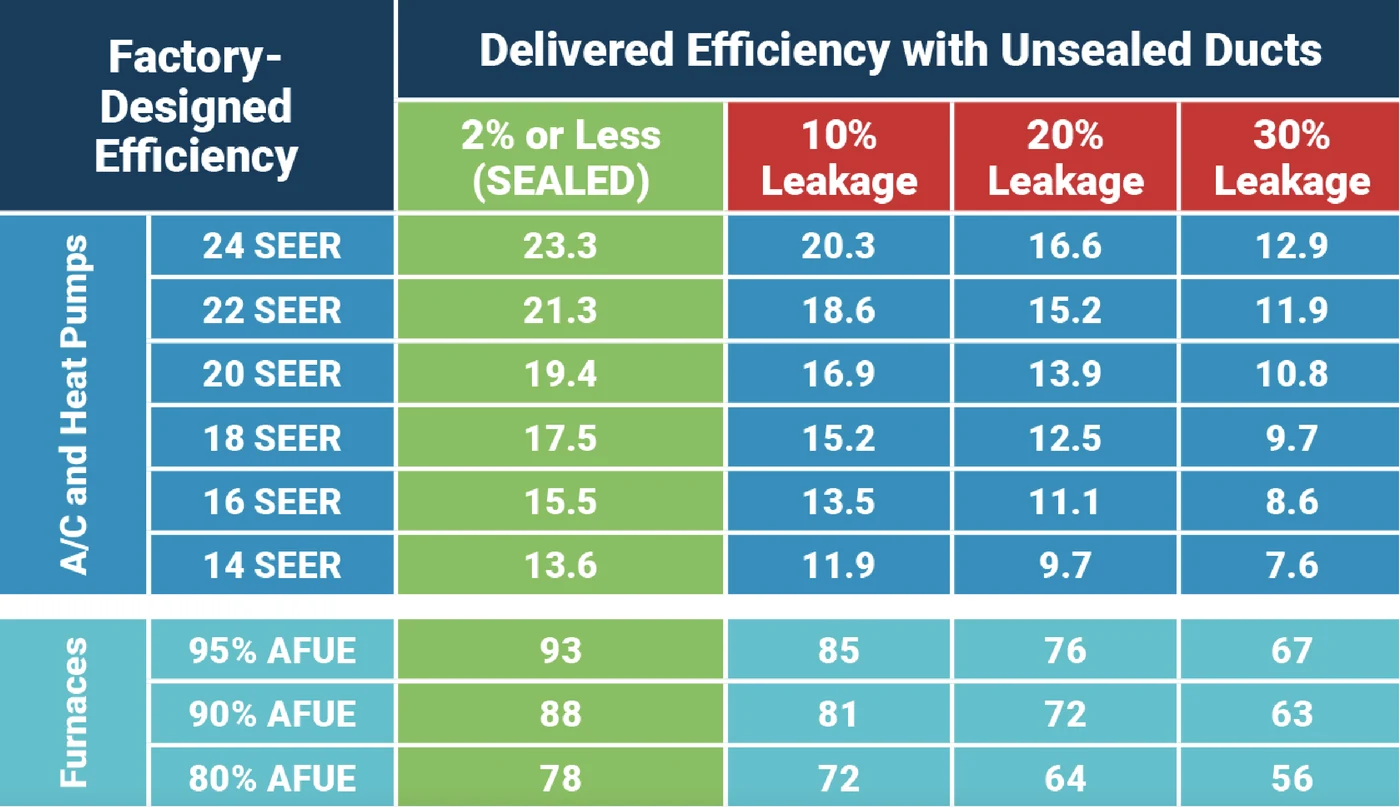
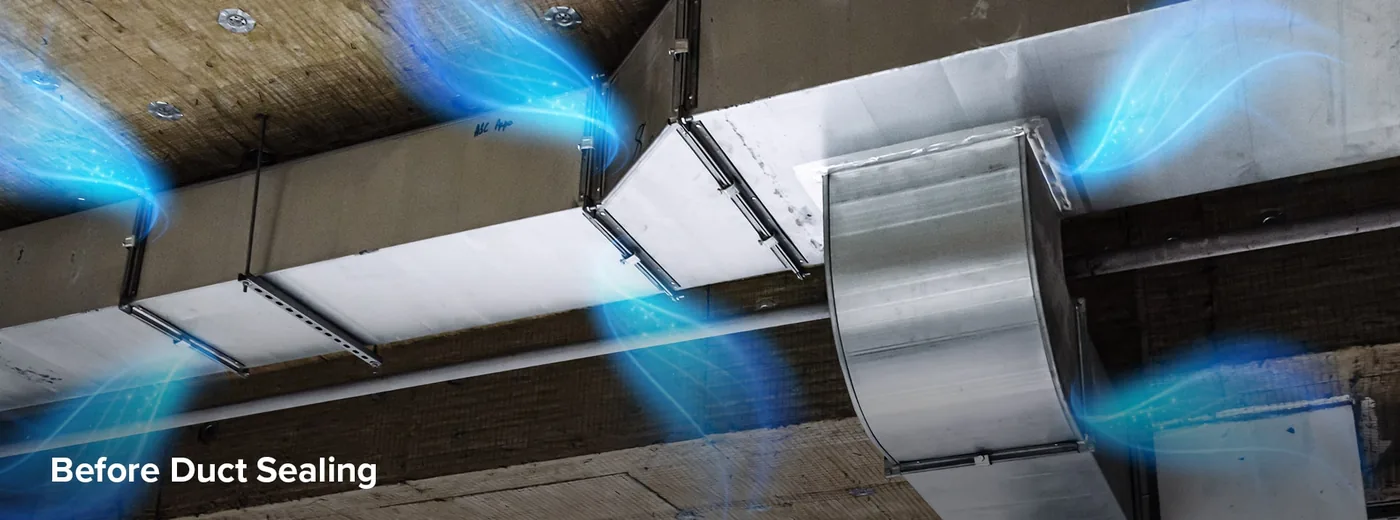
ENERGY STAR estimates that in a typical house, 20 to 30 percent of the air moving through the ducts is lost to leaks, holes and poorly connected ducts. On the Gulf Coast, most of that ductwork runs through hot, humid attics or other unconditioned spaces. Leaky supplies dump air you paid to condition into those spaces. Leaky returns pull hot, wet air and attic dust back into the living or working space. You feel it as rooms that never catch up, a building that stays sticky at a normal setpoint, dust that returns after you clean, and registers that sweat. Measuring the leakage is how we stop guessing about which of those symptoms the ducts are actually causing.
How the seal works
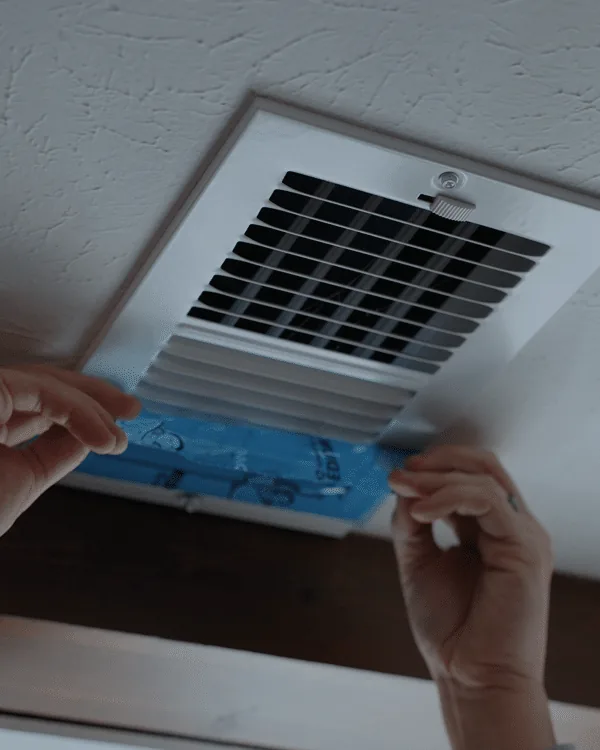
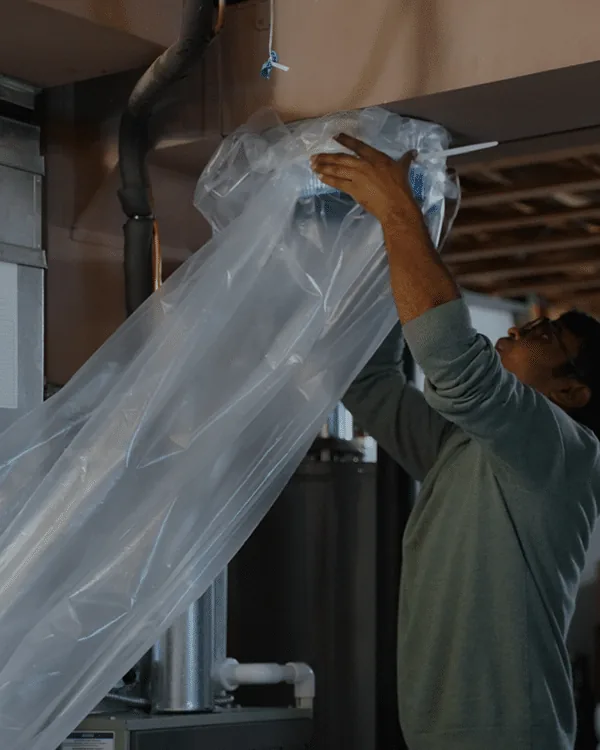
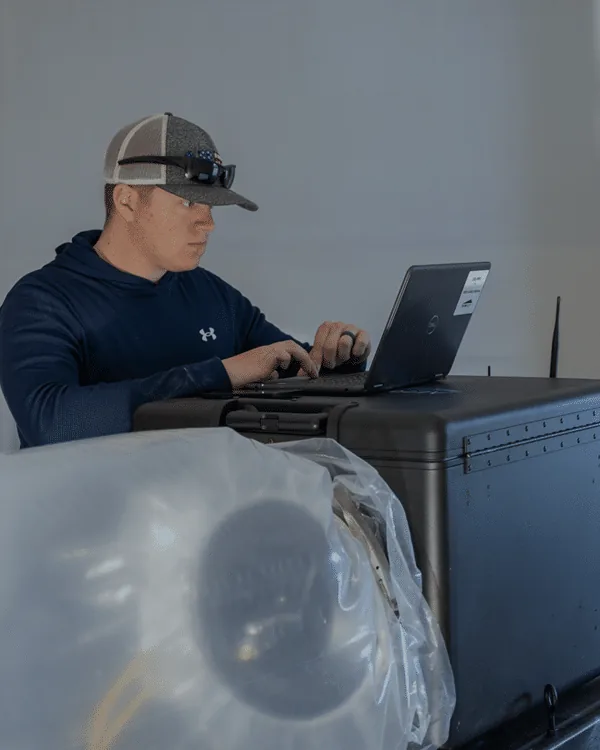
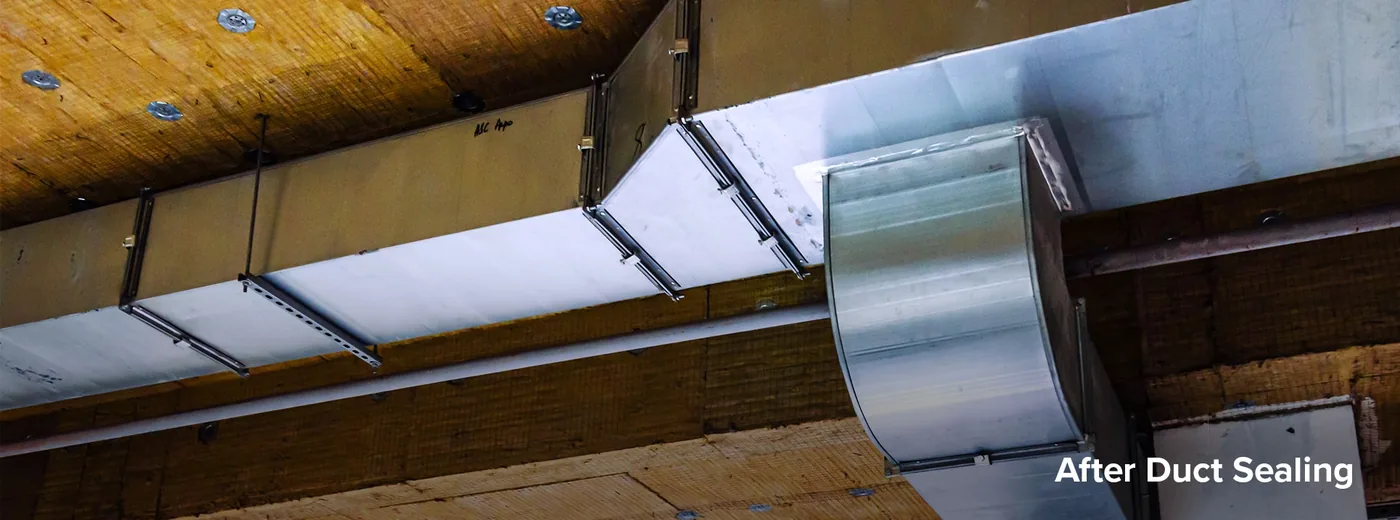
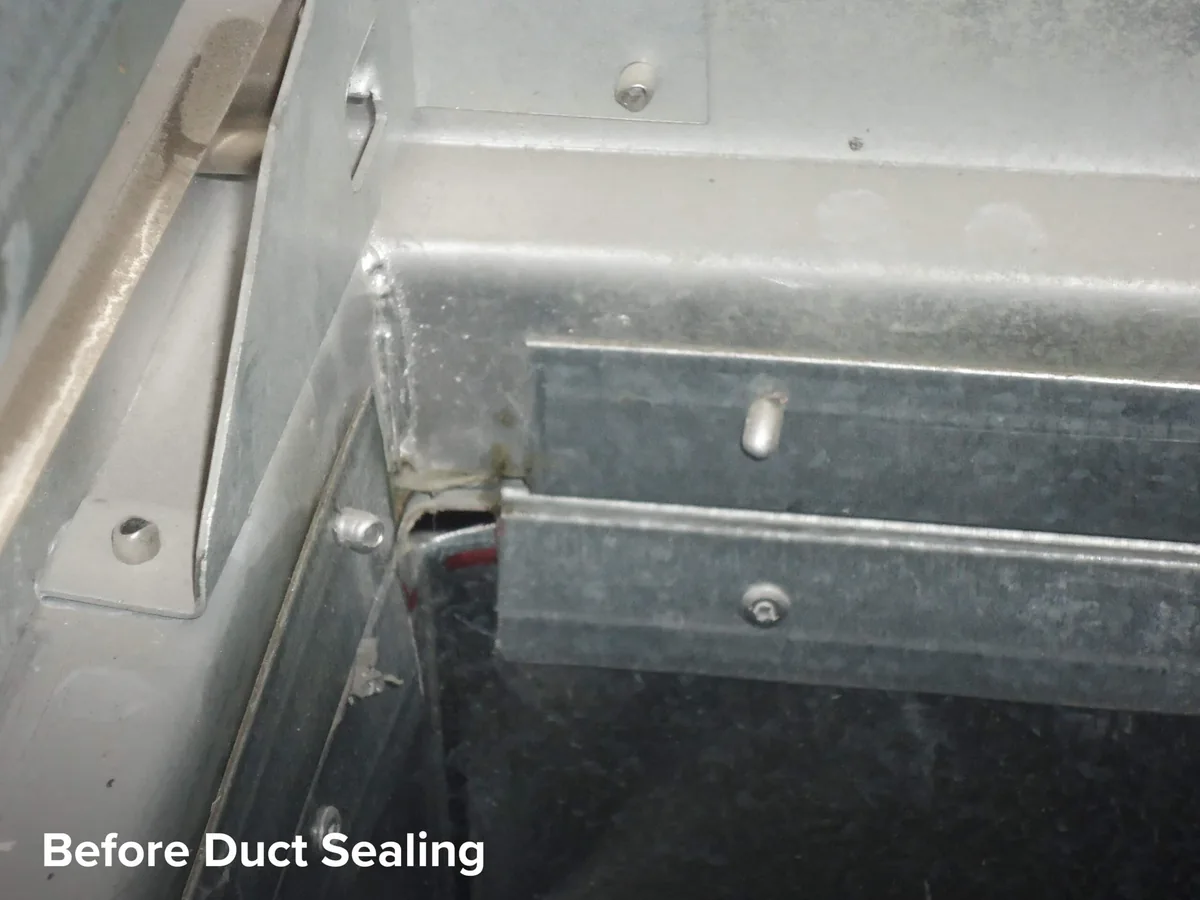
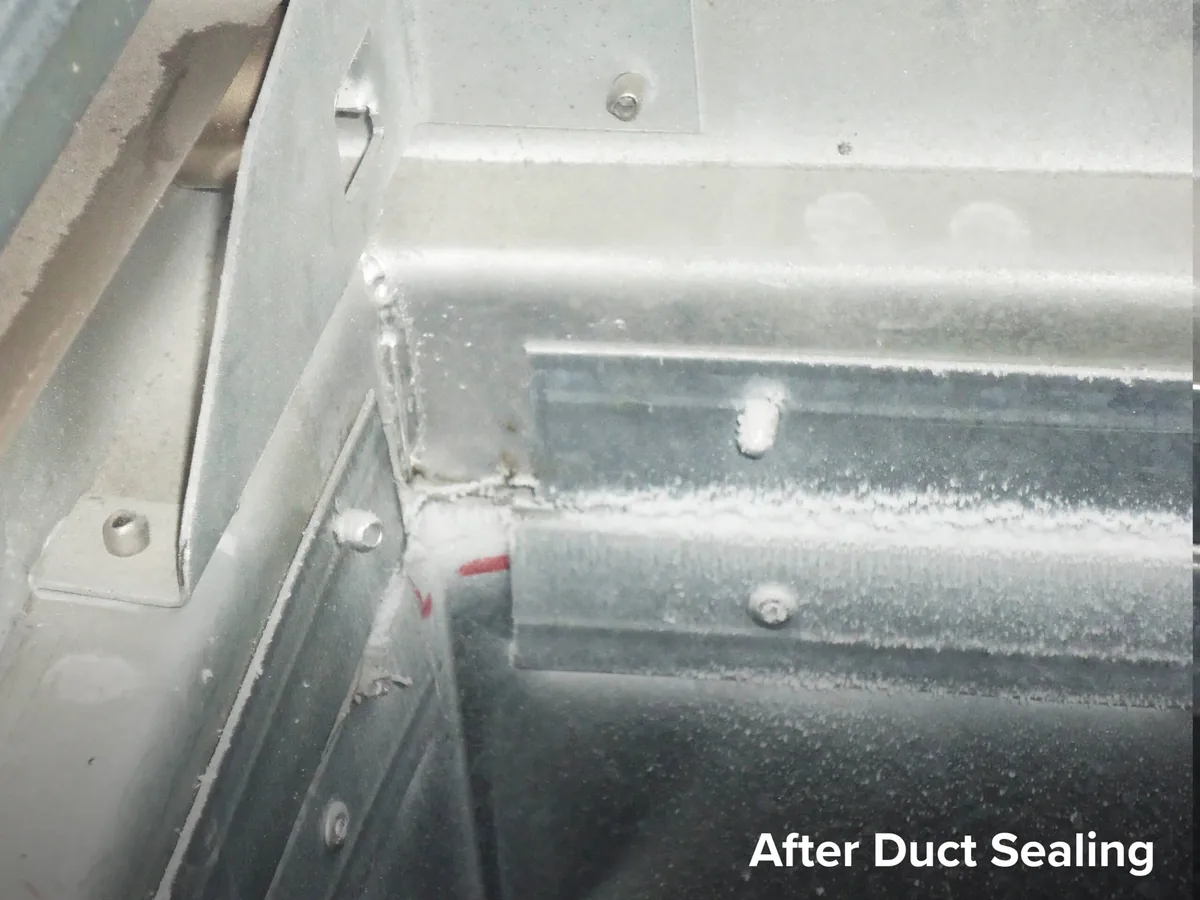
We block every register, isolate the air handler and coil so nothing reaches your equipment, and pressurize the duct system. Then we run the preseal test. Aeroseal states that the process seals holes up to 5/8 of an inch. A fog test shows us any disconnects that need a hand repair first. A computer-controlled machine then sends a water-based sealant mist through the ducts. The particles collect at the edges of each leak and build up until it closes. We watch the leakage fall in real time, retest at the same 25-pascal reference, and give you a documented before-and-after seal report. Most homes take about half a day.
What it won’t do
Aeroseal does not reconnect a duct that’s fallen apart, and it isn’t a fix for crushed, rusted or badly designed ductwork. We repair those by hand first, or we recommend a different path when that’s the honest answer. It isn’t the right tool for ducts buried in a slab, either. If sealing isn’t the right answer for your home, we’ll tell you — and we’ll still leave you with a clear picture of what the test found.
Seal with your new system
If you’re replacing equipment, have the ducts tested at the same time. A high-efficiency system on leaky ducts can’t deliver the efficiency on its label: conditioned air is still lost to the attic, and the equipment works harder than it should. Testing and, when the numbers support it, sealing with the installation is how we protect the investment you’re already making.
Why Texcellent
Terry McWilliams is BPI Certified as a Building Analyst Professional and looks at the whole home, not just the box in the attic. Every recommendation is Custom-Air Service: a solution tailored to that building and budget, built on real testing and honest options that leave you better off. That work is guided by our PEACE Initiative — Professionalism, Expertise, Accuracy, Craftsmanship and Efficiency. Custom-Air Service with PEACE.
Call (281) 402-5100 to schedule a duct leakage test, or use the request form to get a quote. This service is for homes. Texcellent gives you PEACE.
Related services: Duct Cleaning and HVAC Diagnostics, Consultations and Testing.